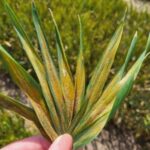
 Stripe rust, also known as yellow rust, is caused by the pathogen Puccinia striiformis f. sp. tritici. It is a fungal disease that affects wheat in many parts of the world. Stripe rust damages the plant by growing in the leaves and producing spores that break through the leaf surface.
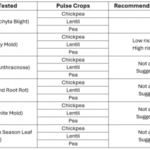 Seed health testing is in full swing at the Regional Pulse Crop Diagnostic Lab (RPCDL). Preliminary data from RPCDL on ongoing seedborne fungal pathogen tests on pulses (from harvest 2025 to planting 2026) indicate a potential increase in the number of seed lots infected with diseases such as Ascochyta Blight, Gray Mold (Botrytis), Anthracnose (Colletotrichum), and Late Season Leaf Blight (Stemphylium) compared to previous years.
 Many Montana producers are preparing to plant nearly a month earlier than average this spring. Early field access provides advantages, including workload management and moisture capture, particularly in a year when drought is a concern. However, planting ahead of schedule also increases exposure to frost damage and early-season disease pressure from pathogens such as Pythium and Rhizoctonia, which thrive when seeds germinate slowly in cool soils. This AgAlert summarizes key early-planting considerations related to disease and insect pressures, agronomic conditions, and nutrient management.
Recent late-season rains across much of Montana have created conditions that may delay harvest, trigger pre-harvest sprouting in wheat and barley, and promote mold development in mature crops. These conditions also encourage the emergence of volunteer wheat and grassy weeds–key contributors to the “green bridge” that allows wheat streak mosaic (WSM) disease to persist and spread in the landscape.
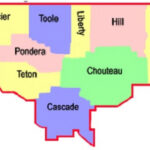 The Montana State University (MSU) Extension Pesticide Education Program (PEP) is offering the 2025 Pest Management Tour for pesticide applicators in Private Applicator Training (PAT) District 3 from September 29th to October 3rd. The tour will cover nine locations in five days with support from MSU County Extension Agents. Private applicators may attend the morning or afternoon session for three private applicator credits, or all day for six credits. Commercial applicator credits are also available and can be viewed on the PMT event website.
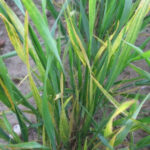 Recent late-season rains across much of Montana have created conditions that may delay harvest, trigger pre-harvest sprouting in wheat and barley, and promote mold development in mature crops. These conditions also encourage the emergence of volunteer wheat and grassy weeds–key contributors to the “green bridge” that allows wheat streak mosaic (WSM) disease to persist and spread in the landscape.
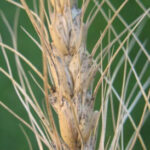 As wheat harvest progresses across Montana, it’s important to keep an eye out for diseases that may have developed late in the season or become noticeable at harvest that can still impact yield, grain quality or seed viability. Identifying disease issues now can help in making post-harvest decisions, planning seed for next season, and understanding potential impacts on grain quality.
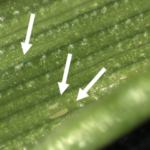 Wheat streak mosaic disease (WSM) is making a strong return this season. Nearly a decade after the 2015-2016 outbreak, the Schutter Diagnostic Lab is seeing a spike in cases, especially across Montana’s Golden Triangle. This AgAlert provides a refresher on identifying and managing WSM in your current crop.